Sign-up for Our Email Newsletter
News for Culinary Job Training
How Our Meals Have Changed
We’ve learned a lot over the years about how to get the best bang for our buck. Here are some ways we’ve improved our meals over time.
New Cooking Methods
Roasting vegetables is out, which shrinks and adds fat to our offerings. Now we’re steaming our veggies, retaining much more of their nutritional value and size.
Using Our Equipment More Effectively
We used to rely on mixing all of our ingredients in one 65 gallon kettle. That often limited us to serving soups and stews. Now we’re preparing our ingredients separately, blanching and steaming our veggies, and reserving the kettles for mass quantities of starches. This makes a more appetizing and more dignified meal for our clients.
More Balanced Portions
We’ve been adding more seasonal vegetables to our meals and creating a healthier, more balanced plate for our clients.
Integration of Menus
We’re taking what we’ve learned from making healthy, scratch-cooked school meals and applying this insight across all of our meal production. By improving our bulk ordering across all of our menus, we’re reducing costs and increasing our efficiency.
More Raw Ingredients
Over the years, we’ve moved from using mostly prepared food in our meals to more raw ingredients, which ensures we’re producing the freshest and healthiest meals for our clients.
Fresher Veggies
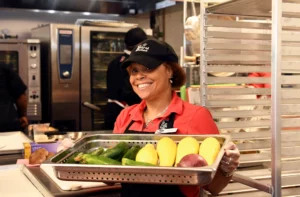
We’re getting more of our seasonal vegetables from local farms and the veggies we’re using in our meals are fresher and tastier than ever!
Better Packaging
With our new vacuum sealer, we can provide professionally packaged fresh snacks packed with fresh veggies to after-school programs and corner store partners.
4 Reasons We’re Not A Soup Kitchen

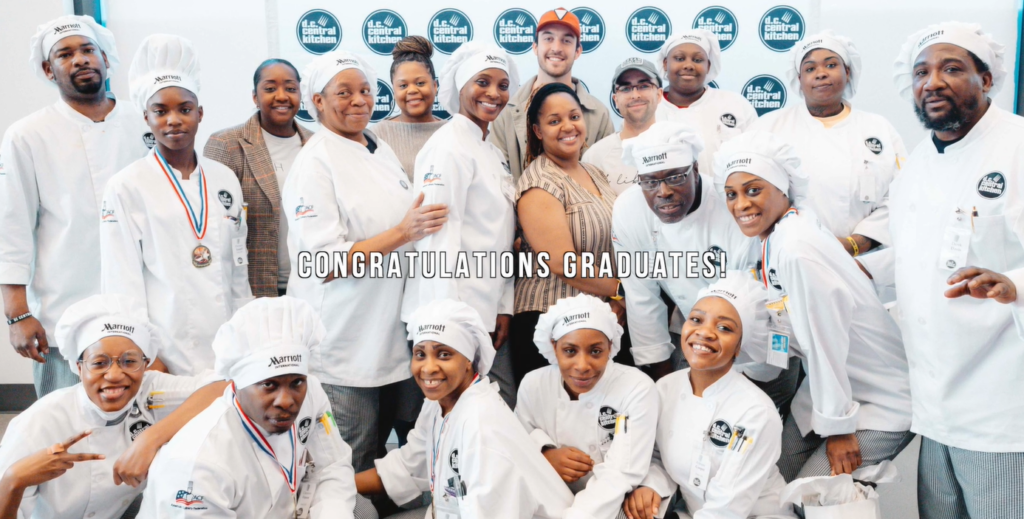
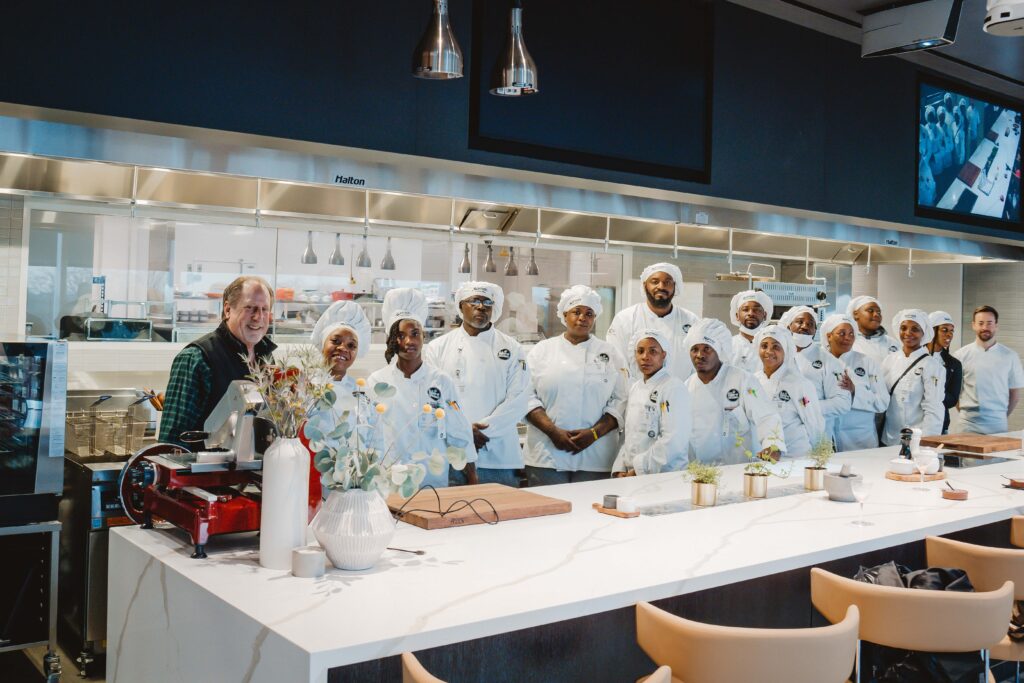
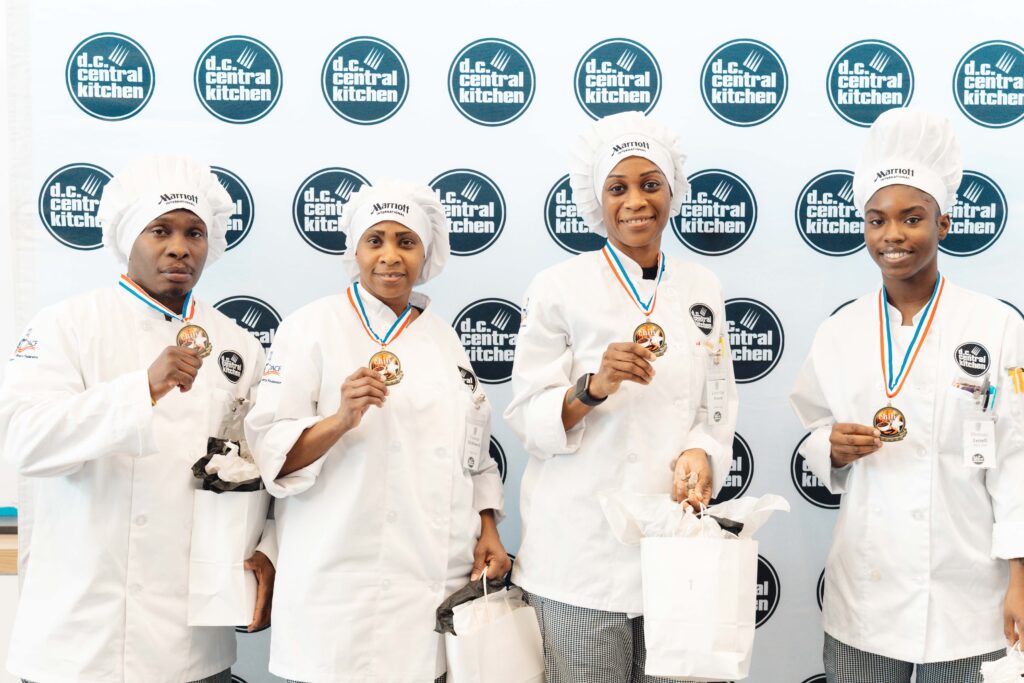
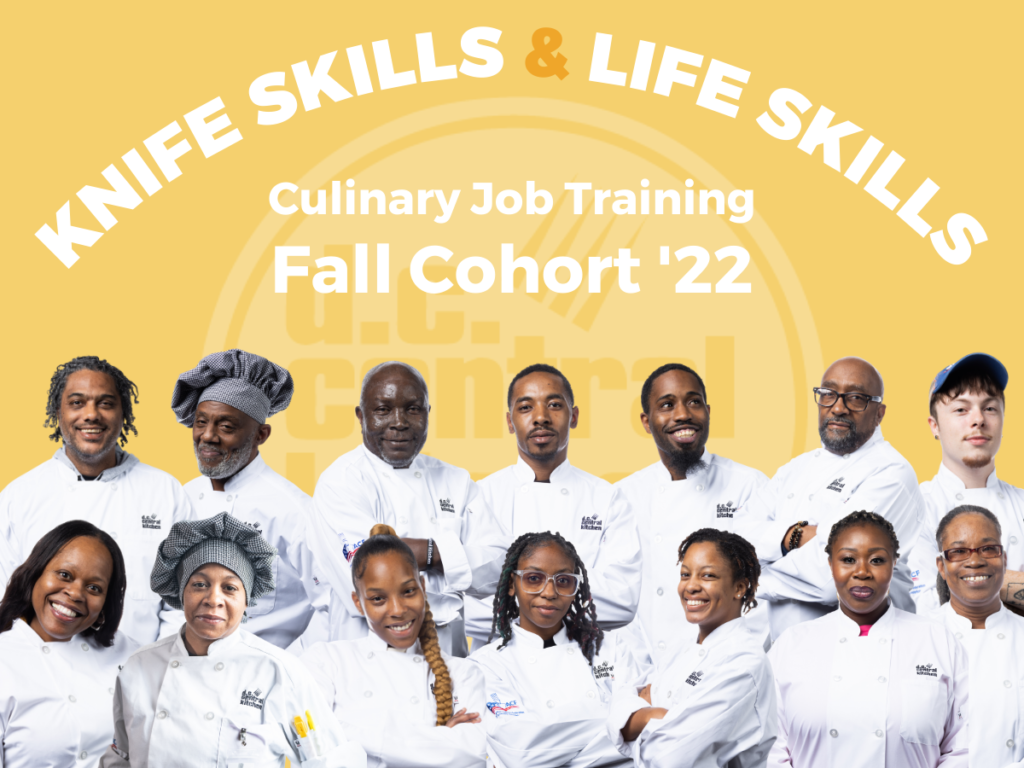
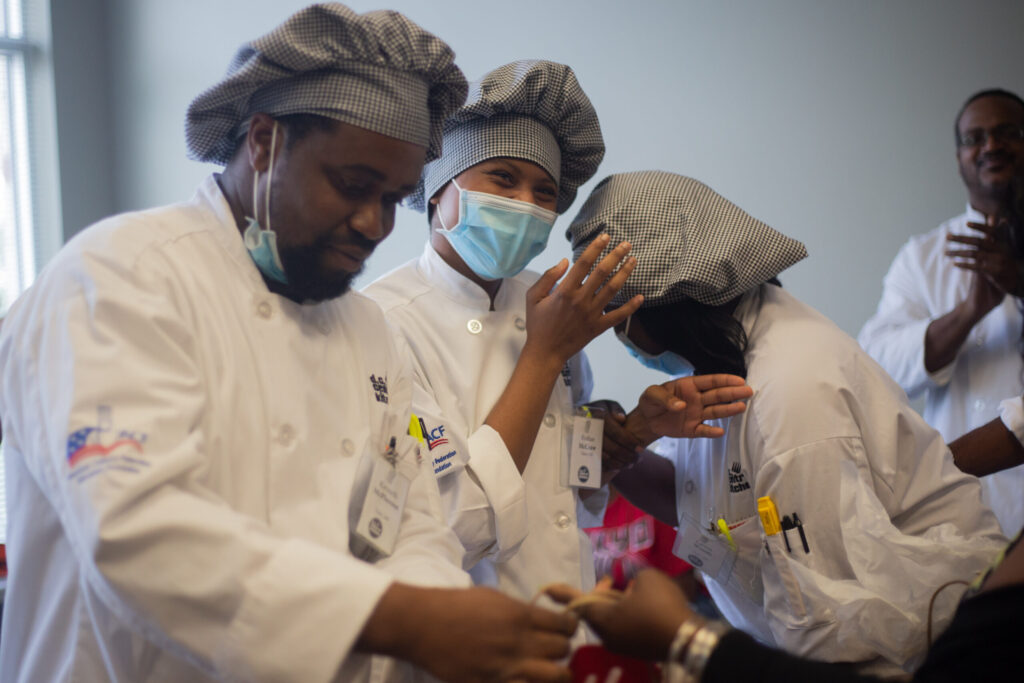
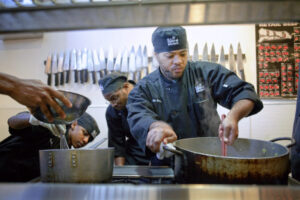
DC Central Kitchen is about using food as a tool for empowerment. Here are men and women graduating from our 14 week Culinary Job Training Program.
The most common misconception about DC Central Kitchen is that we’re a soup kitchen. Here are 4 ways we are very different.
DC Central Kitchen doesn’t serve meals. Unlike a soup kitchen, no one lines up at our door to receive a meal. Using recycled food from the community and an army of volunteers, our main kitchen in the basement of the largest shelter in America produces 5,000 meals every day that are distributed to nearly 100 partner agencies around the city. The meals we produce help defray food costs of the agencies we serve, allowing them to focus more of their limited resources on their unique programming.
DC Central Kitchen is not a feeding organization. Simply feeding more people is not our goal. Food is a tool, a gateway, to make people’s lives better. With every meal we distribute comes a message of empowerment. Through our 14 week Culinary Job Training Program, we’re shortening the line of hungry people and breaking the cycle of dependency by providing real opportunities for people to make their lives better through hard work.
Our volunteers work alongside the people they are helping. This is different than a soup kitchen, where volunteers are working behind a sneeze guard barrier. At DC Central Kitchen, our volunteers chop and dice alongside students and graduates from our 14 week Culinary Job Training Program, which includes men and women just out of prison, individuals who were formally homeless, and people that once suffered from addictions. It’s not just about chopping and dicing. We’re challenging stereotypes about “the poor” and “the hungry” in the process.
We’ve pioneered social enterprise. We don’t get by pleading for pennies. Through our healthy meals for DC Public Schools, in-house catering business, and partnership with corner stores to provide fresh produce, we’re generating 60% of our own revenue, becoming more sustainable, and providing innovative solutions to combat hunger and promote health in the community. All of our social enterprise projects employ our culinary graduates at living wages and provide more opportunities for those who were previously dependent on society to give back.
Restaurants Give Back to Offer Hope, Advice to Chronically Unemployed

Chef Vinod from Indique, a restaurant participating in Sound Bites, sharing culinary wisdom with students on Heritage Day.
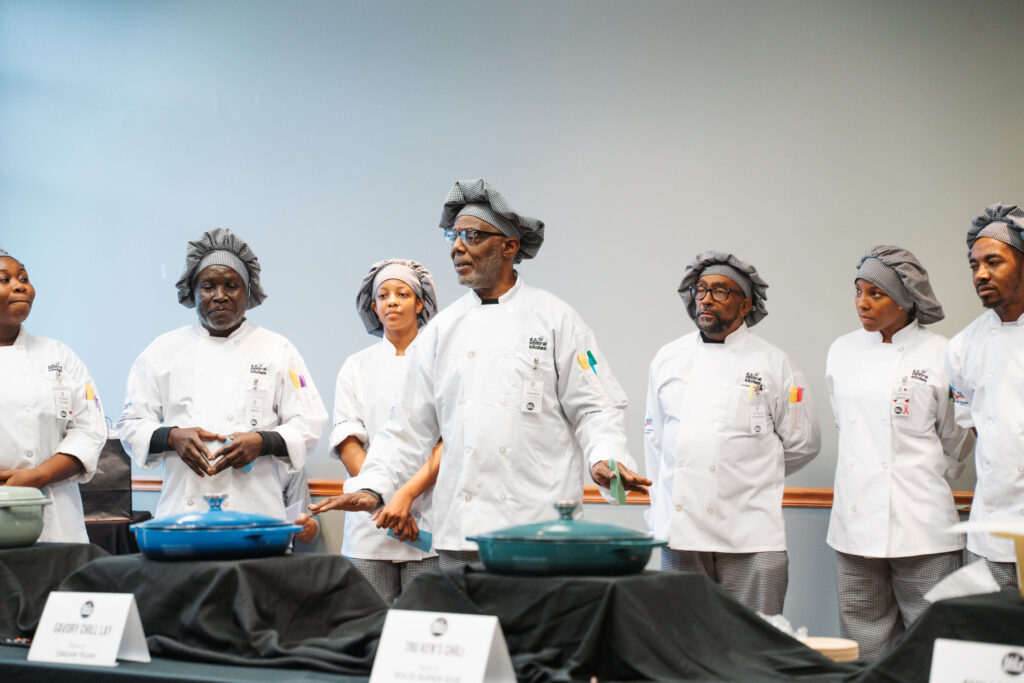
Adults who were unemployed, in prison, or homeless just a few months ago are cooking their way to success through DC Central Kitchen’s Culinary Job Training Program. Their first challenge? Whipping up empanadas that will be judged by professionals in the restaurant industry.
The Culinary Job Training Program is just one of the DC Central Kitchen programs that benefits each year from Sound Bites, an outdoor food and musical festival on May 19 at the 9:30 Club. The event will feature dishes from such notable restaurants as El Centro, Bar Pilar, Pearl Dive Oyster Palace, The Hamilton, and many more.
Beyond the event, restaurants featured at Sound Bites are getting involved in other ways. Chef Anthony Lombardo from 1789 and Lori Scott, Sales & Marketing Manager from Gordon Biersch, will meet students and provide career advice during the students’ cook off on May 8. Lombardo is an active supporter of the Culinary Job Training Program and Gordon Biersch recently raised $7,800 for DC Central Kitchen from their Navy Yard location opening.
To prepare for the cook off, students, who work in teams, are expected to research empanada recipes and bring them to team members for collaboration. Teams have two days to choose, practice, and tweak the dish for the competition.
The cook-off occurs during week six of the 14-week program, which trains students for careers in the food industry, including all facets of work in a professional kitchen. Additionally, students attend self-empowerment sessions and graduates are assisted in an intense job search to obtain full-time employment at local restaurants, hotels, caterers, and other hospitality businesses.
“We couldn’t do our work without our partners in the restaurant industry,” said Paul Day, Communications Manager for DC Central Kitchen. On April 24, chefs from four participating Sound Bites restaurants visited DC Central Kitchen on Heritage Day, a hands-on cooking demonstration that provides culinary skills and career guidance to students in the program.
“This program provides a unique opportunity to encourage an open dialogue about personal challenges and then we help the students develop strategies for dealing with them,” said Marianne Ali, Director of Culinary Training. “We use food preparation to prepare students for future careers, but also to teach life skills.”
For students like Shania, the program provides a unique opportunity for growth. “It has been challenging in every way,” she said. “It’s helping me with the constant battle to break out of my old patterns.”
For others, the program teaches discipline. “I’ve learned to accomplish a lot of things, like being more responsible, and to not let my attitude disrupt my future,” said Lawrence. “I am learning how to ask for help.”
DCCK Launches Arlington County Culinary Job Training Class
DC Central Kitchen has partnered with the Arlington Employment Center to launch a new Culinary Job Training class. Utilizing the kitchen at the Fairlington Community Center, this 12 week class will expand opportunities for returning citizens that live in the county.
On its 4th week, the Arlington Class is 9 students strong – and is led by Chef Instructors Rock Harper and Kendall Barrett. Chef Kendall joins us as a Chef Instructor after many years of generously dedicating her time as a guest chef, conducting culinary demonstrations for DC Central Kitchen trainees. Kendall hopes to add coursework in baking to the program, drawing on her passion and past experience as a bake shop owner.
Leading up the empowerment sessions at the site is James Weeks, DCCK culinary graduate and First Helping Outreach Specialist who has spearheaded several initiatives at the Kitchen to help his homeless clients gain critical career skills and, ultimately, jobs.
This class is the first of many CJT “go-teams”, expanding the program beyond our 425 2nd Street Kitchen. The Culinary Job Training program always has more applicants than it can accommodate, and partnerships like this one with the Arlington Employment Center create exciting opportunities for us to serve more students, providing them with the critical tools they need to break the cycle of dependency and find jobs.
Evaluating Our Impact
This post, republished from The Huffington Post, kicks off our Job Raising Campaign. You can join us in shortening the line and empowering men and women to change their lives. Visit our Crowdrise page and make a contribution today. Your contribution helps us reach our goal of winning $150,000 from the Skoll Foundation. Tell your friends and spread the word.
On any given day at DC Central Kitchen, you can meet men and women who have changed their lives through our Culinary Job Training program. Ask them where they were before coming to DCCK and where they are now. You’ll hear powerful stories, like that of Jessica, our Human Resources Assistant, that will deepen your understanding of poverty, hunger, and unemployment in our community.
When our students graduate and get jobs, they are breaking the cycle of poverty. They’re no longer costing taxpayers millions in prison costs and social services and they are paying taxes. They’re supporting their families, paying rent, and becoming valuable consumers. Their children are learning that they are not destined for prison, addiction, and homelessness, but can have a good job and promising future like mom or dad. It’s one thing for us to say that hiring ex-offenders is a great way for cities to save money in a down economy. It’s another thing to go out and prove it, in the unforgiving language of dollars and cents.
We have always understood our impact intuitively, but now we want to measure this impact systematically. We have lots of other questions we want to answer. Are our programs getting more effective and efficient? What programmatic changes can make it possible to have a bigger impact on our community? We’re taking on questions like this with a strategic, evidence-based approach, making sustained efforts across all of our programs to track our larger impact through data, apply that data in formulating new solutions, and share our impact in powerful, meaningful ways.
The lives of our culinary graduates begin with heart-wrenching situations, but offer inspiring endings. With narratives like these, why are we bothering with all this data, especially if it may produce some unexpected, maybe even unwelcome findings?
DC Central Kitchen understands that evaluating our impact will give us the data-driven tools to improve. Transparency is in our organizational DNA and we are committed to improving accountability and efficiency throughout our operation. For example, we can parse out trends in graduation and job placement rates, and then reallocate resources and adjust our approach to better meet the needs of our diverse students. We can then analyze what works for all students, and what is particularly successful for women, for men, and for students with histories of incarceration, addiction, or mental illness.
People who attend our Culinary Job Training program’s graduations see firsthand how DC Central Kitchen changes lives and we hope that thorough, thoughtfully collected data about our overall impact can be equally powerful. Every DCCK program now uses state-of-the-art performance management software to track data and performance.
We can tell donors how many pounds of local food we are purchasing, the job placement rates of our culinary job training graduates, and the participation rates for our school meals program. But we can also use this system to set performance goals and evaluate indicators of long and short term success. By generating real-time reports, we can not only measure progress over time, but quickly address any drops in performance.
We couldn’t measure these impacts without the help of some outstanding community partners. For example, we are working with a team of MBA candidates from George Washington University to develop a return on investment formula that will evaluate the economic impact across all of our programs. And thanks to the support of Kaiser Permanente, DCCK staff members are enrolled in an intensive six-month institute to learn how to capture and evaluate the impact of food-related nonprofit programs upon public health.
In the success section of our website, under DCCK by the Numbers and Economic Impact you can see some of the significant measures we have captured thus far. We look forward to continuing those efforts in order to improve our programs and expand our reach, ultimately making it possible for DC Central Kitchen to empower more people like Jessica to change their lives. And those are stories we can’t wait to tell.